Яке програмне забезпечення використовується в галузі охорони здоров’я?
Вибір програмного забезпечення для сфери охорони здоров’я — це не лише питання функціональних можливостей. Після багаторічних бесід з керівниками медичних закладів та фахівцями з впровадження стає очевидною одна закономірність: організації досягають успіху тоді, коли їхні системи спрощують повсякденну роботу, а не створюють додаткових адміністративних завдань.
Що таке програмне забезпечення для сфери охорони здоров’я та чому воно є необхідним?
При виборі програмного забезпечення головне — не саме програмне забезпечення. Головне — налагодити зв’язок між людьми — лікарями, працівниками реєстратури, відділами розрахунків та пацієнтами — щоб нікому не доводилося бігати до факсу в пошуках інформації. Такі організації, як HIMSS, вже роками пропагують це, і дані це підтверджують: інтегровані системи означають менше помилок, швидший обмін інформацією та більш чітку звітність перед регуляторними органами. Якщо проігнорувати інтеграцію, вам доведеться мати справу з дублюванням даних, пропущеними прийомами та проблемами з дотриманням нормативних вимог.
ℹ️ Варто знати: Міністерство охорони здоров’я та соціальних служб США (HHS) вимагає, щоб більшість інструментів, призначених для роботи з пацієнтами, відповідали стандартам « HIPAA » ще до того, як вони почнуть обробляти реальні дані пацієнтів. Не пропускайте цей крок, щоб заощадити кілька тижнів.
10 основних типів програмного забезпечення для сфери охорони здоров’я, яке використовують фахівці
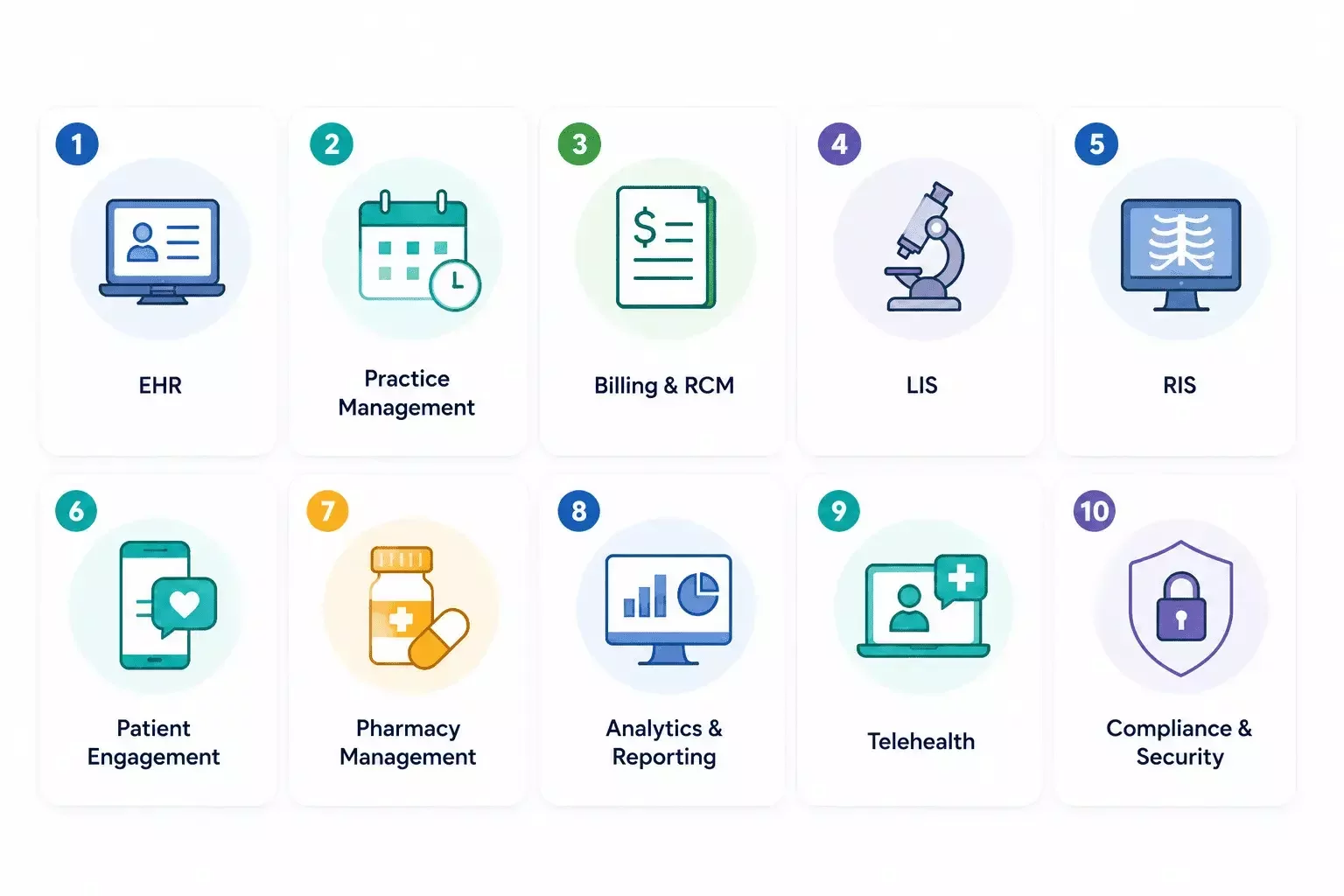
Мене просять перелічити типи програмного забезпечення для сфери охорони здоров’я, які справді мають значення, тобто ті, які постійно рекомендують консультанти з організації медичної практики:
Програмне забезпечення для управління охороною здоров’я — командний центр. Воно об’єднує клінічні та адміністративні дані в єдину інформаційну панель, завдяки чому ніхто не працює на основі застарілої інформації.
Програмне забезпечення для системи управління пацієнтами — забезпечує ведення історії хвороб, планування візитів та організацію кампаній з подальшого спостереження — це те, що відрізняє спокійну реєстратуру від тієї, що потопає в стікерах.
Програмне забезпечення для планування роботи медичного персоналу — на мій погляд, його недооцінюють. Автоматизуйте планування змін, і продуктивність персоналу зросте — а рівень вигорання знизиться — швидше, ніж ви очікуєте.
Програмне забезпечення для бухгалтерського обліку в сфері охорони здоров’я — нікому не подобаються виставлення рахунків, нарахування заробітної плати чи складання звітності відповідно до нормативних вимог, але цей інструмент не дасть фінансовим питанням забрати у вас весь тиждень.
Програмне забезпечення для ланцюга поставок у сфері охорони здоров’я — ваша система раннього попередження щодо запасів. Марля, рукавички, обладнання — краще дізнатися про дефіцит до того, як він виникне посеред процедури, а не під час неї.
Програмне забезпечення для медичної діагностики — допомагає лікарям бачити чіткіше під час аналізу результатів аналізів та медичних знімків. Корисне в звичайний день; рятує життя у важкі часи.
Програмне забезпечення для медичної інформатики — перетворює величезний масив клінічних даних, що генерується кожною медичною установою, на інформацію, яку лікарі можуть реально використовувати.
Програмне забезпечення для управління лікарнею — забезпечує функціонування всього закладу. Я запитав п’ятьох адміністраторів лікарень, яке програмне забезпечення для управління лікарнею є найкращим, і отримав п’ять різних відповідей — все залежить від конкретних умов вашого закладу.
Програмне забезпечення для електронних медичних карток (EHR) — цифрова основа, яка дозволяє фахівцю отримати доступ до вашої історії хвороби, а не починати все з нуля.
Програмне забезпечення для телемедицини — відеоконсультації, дистанційний моніторинг, віртуальні огляди. Більшість медичних закладів поспішно впровадили ці технології після 2020 року, і з того часу жоден з них не відмовився від них.
⚠️ Зверніть увагу: будь-яке програмне забезпечення, що має доступ до даних пацієнтів, потребує регулярних перевірок на відповідність вимогам. Якщо їх пропустити, ви ризикуєте отримати штрафи — або, що ще гірше, втратити довіру пацієнтів.
Як вибрати відповідне медичне програмне забезпечення для вашої клініки
Правильний вибір залежить від розміру, бюджету та того, наскільки складним вже є ваш робочий процес.
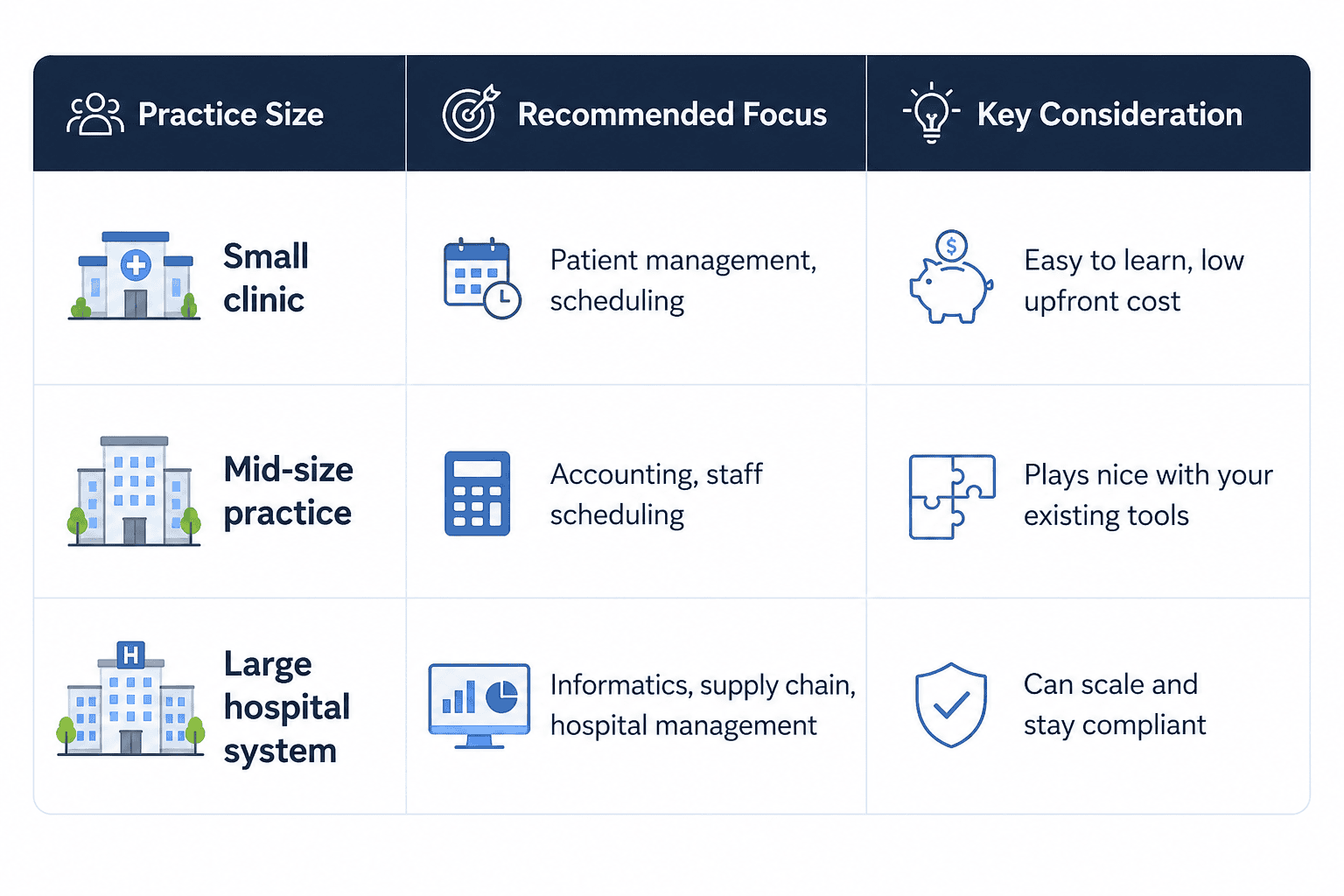
Більшість медичних закладів починають з менших масштабів, ніж їм здається необхідним. Гнучкої системи управління медичними записами ( CRM ) зазвичай достатньо для уніфікації комунікації з пацієнтами та ведення їхніх медичних записів, перш ніж впроваджувати більш спеціалізовані рішення. Після того як така система запрацює, команди часто впроваджують інструменти автоматизації в сфері охорони здоров’я, щоб позбутися рутинної адміністративної роботи.
✅ Короткий перелік питань, які слід перевірити перед підписанням будь-якого документа:
Заздалегідь переконайтеся у відповідності вимогам HIPAA та FDA
Перевірте інтеграцію з тими сервісами, якими ви вже користуєтеся
Попросіть надати справжні відгуки клієнтів
Запитайте, як виглядатиме підтримка через рік
Я спостерігав, як клініки обирають Zoho CRM для сфери охорони здоров’я саме тому, що поєднання його з практичним підтримкою з боку Zoho допомогою у впровадженні Zoho, що зробило запуск плавним, а не хаотичним. Ця проблема зазвичай зводиться до допомоги з налаштуванням, а не до самого програмного забезпечення.
Поширені запитання
- HIPAAзаходи безпеки, що відповідають вимогам
- Шифрування даних як під час передачі, так і на rest
- Багатофакторна автентифікація
- Права доступу користувачів на основі ролей
- Вичерпні журнали аудиту
- Регулярні оновлення безпеки
- Безпечний обмін даними за допомогою таких стандартів, як HL7 та FHIR